
About Department
Prospective students and responsible parents can find here a wealth of information about the department. This includes an exploration of the department’s potentials, curriculum, and available opportunities for students. By delving into these details, you will gain a comprehensive understanding of what the department has to offer.
The Growing Importance of CSE(IoT) Department
In today’s interconnected world, the Internet of Things has emerged as a transformative force across sectors like smart homes, healthcare, transportation, and agriculture. Professionals skilled in IoT are in high demand, and ACE Engineering College equips students with both theoretical knowledge and hands-on experience to thrive in this evolving industry.
The department offers opportunities for research, internships, and industry collaborations. Students gain exposure to real-world applications while building a strong professional network that supports long-term career success.
Cutting-edge Research and Innovations
The department fosters innovation through research projects in smart cities, energy optimization, and healthcare solutions. Students work with modern tools such as Raspberry Pi, Arduino, and cloud platforms to build impactful IoT applications.
Through workshops, conferences, and seminars, students present research findings and gain insights from industry experts, preparing them for the dynamic IoT ecosystem.
Faculty Expertise and Industry Collaborations
The faculty includes experienced professionals from computer science, electronics, and telecommunications backgrounds. Many have industry exposure, enabling them to bring real-world insights into the classroom.
Strong industry collaborations provide students with internships, live projects, and research opportunities, ensuring they stay aligned with industry trends and practices.
State-of-the-art Facilities and Resources
The department provides advanced IoT laboratories equipped with modern hardware, sensors, and development boards. Students gain hands-on experience in prototyping, data analysis, and system integration.
Dedicated research centers and access to online journals, e-books, and courses further enhance learning and innovation capabilities.
Networking and Professional Development Opportunities
Students benefit from industry visits, guest lectures, workshops, hackathons, and competitions. These activities help them build professional connections and gain real-world exposure.
Student Success Stories and Alumni Achievements
Alumni have secured positions in leading organizations across domains like software development, cybersecurity, and IoT consulting. Students regularly achieve recognition in competitions and conferences for their innovative work.
A Glimpse of ACE Student Future – the Promising Journey Ahead
The CSE (IoT) department continues to shape future innovators through a strong curriculum, expert mentorship, and industry-driven training. Students are empowered to excel and make meaningful contributions to the evolving world of IoT.
Objectives
- Provide quality technical education and support all-round student development.
- Encourage participation in research and industry-collaborative projects.
- Enable graduates to pursue higher studies in IoT core areas.
- Promote strong Industry-Institute partnerships with global collaborations.






















Accreditation


HOD Profile
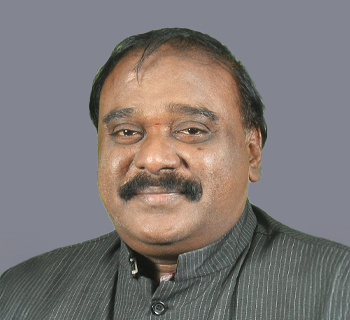
Dr. M. V. Vijaya Saradhi
Professor, Dean(Government Relations & Academic Grants & Hod- CSE (IoT)
Dr. M. V. Vijaya Saradhi is a distinguished academician, researcher, and administrator with more than three decades of experience in the field of Computer Science and Engineering. He currently serves as Professor, Dean – Government Relations & Academic Grants, and Head of the Department of CSE (IoT) at ACE Engineering College. Holding a Ph.D. in Computer Science & Engineering from Osmania University, his expertise spans Software Engineering, Artificial Intelligence and Machine Learning, Internet of Things, Quantum Computing and emerging technologies. Throughout his academic journey, he has demonstrated exceptional commitment to quality education, research excellence, and innovation-driven learning.
Dr. Saradhi has authored over 60 research publications in reputed SCIE, Scopus, and Web of Science indexed journals, along with several patents and scholarly textbooks in advanced computing domains. His contributions to academia extend beyond teaching through active involvement in curriculum design, doctoral research guidance, national and international conferences, AICTE-sponsored initiatives, and industry–academia collaborations. He has also played a vital role in promoting innovation, entrepreneurship, and student-centric research through hackathons, startup mentorship, funded projects, and emerging technology programs.
Recognized for his outstanding academic leadership and contributions to engineering education, Dr. Saradhi has received several prestigious honors, including the “Best Citizens of India” award and multiple excellence awards in teaching and academic coordination. His visionary leadership continues to strengthen research culture, interdisciplinary collaboration, and technological innovation, inspiring students and faculty to excel in both academic and professional pursuits.
Vision and Mission

Vision of the Department
To empower students to develop secure and scalable systems and lead digital transformation addressing societal challenges with global competence, research aptitude and entrepreneurial skills.
Mission of the Department
- M1: To train students with technical, leadership and interpersonal skills, enabling them to solve societal challenges.
- M2: To promote interdisciplinary innovation and prototype development, encouraging students to apply their knowledge to solving real-world problems.
- M3: To equip students with job-ready skills through internships and training programs, enabling them to excel in their careers and competitive examinations
Program Educational Objectives (PEOs)
PEO 1 : To provide graduates with a strong foundation in mathematical, scientific and engineering fundamentals to develop problem-solving abilities through innovative projects and industry internships.
PEO 2 : To prepare graduates for successful careers by equipping them with effective communication skills, team work, self-learning ability, multidisciplinary knowledge and professional values to meet the diverse needs of industry, academia and research.
PEO 3 : To enable graduates to comprehend, analyze, design and develop novel products and technologies that provide solutions to real-world problems.
Knowledge and Attitude Profile (WK)
- WK1: A systematic, theory-based understanding of the natural sciences applicable to the discipline and awareness of relevant social sciences.
- WK2: Conceptually-based mathematics, numerical analysis, data analysis, statistics and formal aspects of computer and information science to support detailed analysis and modelling applicable to the discipline.
- WK3: A systematic, theory-based formulation of engineering fundamentals required in the engineering discipline.
- WK4: Engineering specialist knowledge that provides theoretical frameworks and bodies of knowledge for the accepted practice areas in the engineering discipline; much is at the forefront of the discipline.
- WK5: Knowledge, including efficient resource use, environmental impacts, whole-life cost, reuse of resources, net zero carbon, and similar concepts, that supports engineering design and operations in a practice area.
- WK6: Knowledge of engineering practice (technology) in the practice areas in the engineering discipline.
- WK7: Knowledge of the role of engineering in society and identified issues in engineering practice in the discipline, such as the professional responsibility of an engineer to public safety and sustainable development.
- WK8: Engagement with selected knowledge in the current research literature of the discipline, awareness of the power of critical thinking and creative approaches to evaluate emerging issues.
- WK9: Ethics, inclusive behavior and conduct. Knowledge of professional ethics, responsibilities, and norms of engineering practice. Awareness of the need for diversity by reason of ethnicity, gender, age, physical ability etc. with mutual understanding and respect, and of inclusive attitudes.
Program Outcomes (POs)
- PO1: Engineering Knowledge: Apply knowledge of mathematics, natural science, computing, engineering fundamentals and an engineering specialization as specified in WK1 to WK4 respectively to develop solutions for complex engineering problems.
- PO2: Problem Analysis: Identify, formulate, review research literature and analyze complex engineering problems reaching substantiated conclusions with consideration for sustainable development. (WK1 to WK4)
- PO3: Design/Development of Solutions: Design creative solutions for complex engineering problems and design/develop systems/components/processes to meet identified needs with consideration for public health and safety, whole-life cost, net zero carbon, culture, society and environment. (WK5)
- PO4: Conduct Investigations of Complex Problems: Conduct investigations of complex engineering problems using research-based knowledge including design of experiments, modelling, analysis & interpretation of data to provide valid conclusions. (WK8)
- PO5: Engineering Tool Usage: Create, select and apply appropriate techniques, resources and modern engineering & IT tools, including prediction and modelling, recognizing their limitations to solve complex engineering problems. (WK2 and WK6)
- PO6: The Engineer and The World: Analyze and evaluate societal and environmental aspects while solving complex engineering problems for sustainability with reference to economy, health, safety, legal framework, culture and environment. (WK1, WK5, and WK7)
- PO7: Ethics: Apply ethical principles and commit to professional ethics, human values, diversity and inclusion; adhere to national & international laws. (WK9)
- PO8: Individual and Collaborative Team Work: Function effectively as an individual, and as a member or leader in diverse and multidisciplinary teams.
- PO9: Communication: Communicate effectively and inclusively within the engineering community and society at large, including writing effective reports, preparing design documentation, and delivering presentations considering cultural, language, and learning differences.
- PO10: Project Management and Finance: Apply knowledge of engineering management principles and economic decision-making to manage projects and work effectively as a member or leader in multidisciplinary environments.
- PO11: Life-Long Learning: Recognize the need for and have the ability for (i) independent and life-long learning, (ii) adaptability to emerging technologies, and (iii) critical thinking in the context of technological change. (WK8)
Program Specific Outcomes (PSOs)
PSO 1 : Graduates will be empowered with the skills and expertise required to design and deliver industry-oriented and societal solutions in the area of Internet of Things (IoT).
PSO 2 : Graduates will be proficient in understanding, configuring and securing IoT devices, networks and platforms with familiarity in IoT protocols and technologies.
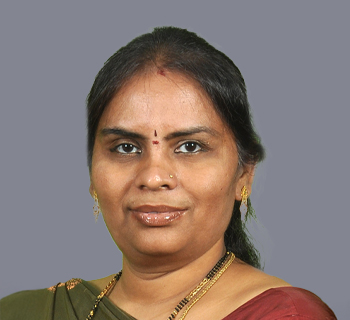
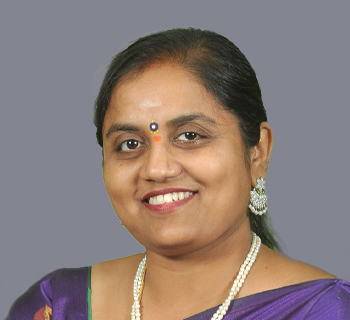
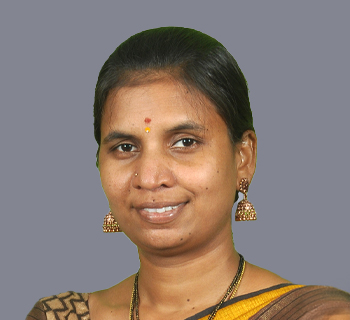
Faculty
| Name of the Program | CSE(IoT) | |
|---|---|---|
| Approved Intake (2025) | 60 | |
| No. of Faculty Members | 10 | |
| Cadre | Number | |
| Professor | 01 | |
| Assoc. Professor | 01 | |
| Asst. Professor | 08 | |
| Adjunct Professor | 00 | |
| Faculty Profile | Qualification | No. of Faculty |
| Ph.D | 01 | |
| Ph.D (Pursuing) | 07 | |
| Postgraduate | 01 | |
| Programmers | 02 | |



Infrastructure
Classrooms
- No of Classrooms: 4
- Type: Smart Classroom (Smart board and Whiteboard)
- Seating Capacity: 70
- Facilities: Projector, Smart Board, Wi-Fi
Laboratories
Lab: 1001 & 1002
Hardware Configuration
- Intel Core i3 Processor Systems
- 4 GB RAM
- 128 GB SSD
- Systems from Wipro, HP, Lenovo and Dell Optiplex
Number of Systems: 45 Systems
Usage
- General Programming Labs
- Computing Practice Sessions
- Department Laboratory Activities
Lab: 2011 & 2012
Number of Systems: 45 Systems
Hardware Configuration
- Dell Vostro 3888 Desktop
- Intel Core i3 & i5-10400 Processor @ 2.90 GHz
- 12 GB RAM
- 128GB SSD
Software Installed
- Ubuntu
- MySQL
- Node JS
- C and Java
- Power BI
- Python IDE
- Android Studio
- Flutter
- Dart SDK
- OpenCV
- VirtualBox
- Hadoop
Subjects / Labs Conducted
- Database Management System Lab
- Node JS / React JS / Django Lab
- Computer Networks Lab
- Data Visualization Lab
- UI Design – Flutter
- Computer Vision Lab
- IoT Security Lab
- Internet of Things Lab
Lab: 1111
Number of Systems: 25 Systems (Center of Excellence in IoT)
Hardware Configuration
- Dell Vostro 3888 Desktop
- Intel Core i5-10400 and Intel Core i3-10400 Systems
- 8 GB RAM
- 128GB SSD
IoT Laboratory Tools and Components
- Computer System with Django & MySQL
- Breadboard
- Arduino Uno Board
- Raspberry Pi 4
- NodeMCU Board
- Light Emitting Diode (LEDs)
- LM35 Sensor
- DHT11 Sensor
- 16 × 2 LCD Display
- Push Button (Tact Switch)
- Ultrasonic Sensor
- ESP32 Board with Cables
- Live Projects of Students
Software Installed
- Ubuntu OS
- Android Studio
Subjects / Labs Conducted
- Linux & Shell Scripting Lab
- IT Workshop
- Web & Mobile Applications Lab
Internet Facilities
- Internet Speed: 100 Mbps
- Connection Type: Broadband / Fiber
- Wi-Fi Coverage: Entire Department
Seminar Hall
- Seating Capacity: 120
- Facilities: Projector, Audio System, Wi-Fi
- Usage: Workshops, Guest Lectures, Seminars
Library Resources
- 264 Titles and 1064 Volumes
- Printable International Journals and National Journals
- E-Journals: IEEE-ASPP & DELNET Membership
- Newspapers
Programming for Problem Solving Lab
PRACTICE SESSIONS
1. Simple Numeric Problems
- Write a program for finding the max and min from the three numbers.
- Write the program for the simple and compound interest.
-
Write a program that prints a multiplication table for a given number and the number of rows in the table.
Example:
5 x 1 = 5 5 x 2 = 10 5 x 3 = 15 - Write a program that shows the binary equivalent of a given positive number between 0 to 255.
2. Expression Evaluation
-
Write a C program, which takes two integer operands and one operator from the user,
performs the operation and then prints the result.
(Consider the operators +, -, *, /, % and use Switch Statement). - Write a program that finds if a given number is a prime number.
-
Write a C program to find the sum of individual digits of a positive integer
and test given number is palindrome. -
A Fibonacci sequence is defined as follows: the first and second terms in the sequence are 0 and 1.
Subsequent terms are found by adding the preceding two terms in the sequence.
Write a C program to generate the first n terms of the sequence.
3. Arrays, Pointers and Functions
- Write a C program to find the minimum, maximum and average in an array of integers.
-
Write a C program that uses functions to perform the following:
- Addition of Two Matrices
- Multiplication of Two Matrices
- Write a program for reading elements using a pointer into an array and display the values using the array.
- Write a program for display values reverse order from an array using a pointer.
4. Files
-
Write a C program which copies one file to another,
replacing all lowercase characters with their uppercase equivalents. -
Write a C program to merge two files into a third file
(i.e., the contents of the first file followed by those of the second are put in the third file).
5. Strings
-
Write a C program that uses functions to perform the following operations:
- To insert a sub-string into a given main string from a given position.
- To delete n Characters from a given position in a given string.
-
Write a C program to determine if the given string is a palindrome or not
(Spelled same in both directions with or without a meaning like madam, civic, noon, abcba, etc.) -
Write a C program that displays the position of a character ch in the string S
or -1 if S doesn’t contain ch. - Write a C program to count the lines, words and characters in a given text.
6. Sorting and Searching
-
Write a C program that uses non-recursive function to search for a Key value
in a given list of integers using linear search method. -
Write a C program that uses non-recursive function to search for a Key value
in a given sorted list of integers using binary search method. -
Write a C program that implements the Bubble sort method
to sort a given list of integers in ascending order. -
Write a C program that sorts the given array of integers
using selection sort in descending order. -
Write a C program that sorts the given array of integers
using insertion sort in ascending order. - Write a C program that sorts a given array of names.
Data Structures Lab
DATA STRUCTURES LAB PROGRAMS
- Write a program that uses functions to perform the following operations on a singly linked list:
- Creation
- Insertion
- Deletion
- Traversal
- Write a program that uses functions to perform the following operations on a doubly linked list:
- Creation
- Insertion
- Deletion
- Traversal
- Write a program that uses functions to perform the following operations on a circular linked list:
- Creation
- Insertion
- Deletion
- Traversal
- Write a program that implements Stack and its operations using:
- Arrays
- ADT
- Write a program that implements Queue and its operations using:
- Arrays
- ADT
- Write a program that implements the following sorting methods to sort a given list of integers in ascending order:
- Radix Sort
- Heap Sort
- Shell Sort
- Tree Sort
- Write a program to implement tree traversal methods (Recursive and Non-Recursive).
- Write a program to implement:
- Binary Search Trees
- B-Trees
- B+ Trees
- AVL Trees
- Red-Black Trees
- Write a program to implement graph traversal methods.
- Write a program to implement the following hash functions:
- Division Method
- Multiplication Method
- Mid-Square Method
- Folding Method
Data Structures Lab ( II Year I Semester)
- Write a program that uses functions to perform the following operations on singly linked list:
- Creation
- Insertion
- Deletion
- Traversal
- Write a program that uses functions to perform the following operations on doubly linked list:
- Creation
- Insertion
- Deletion
- Traversal
- Write a program that uses functions to perform the following operations on circular linked list:
- Creation
- Insertion
- Deletion
- Traversal
- Write a program that implements Stack and its operations using:
- Arrays
- Pointers
- Write a program that implements Queue and its operations using:
- Arrays
- Pointers
- Write a program that implements the following sorting methods to sort a given list of integers in ascending order:
- Quick Sort
- Heap Sort
- Merge Sort
- Write a program to implement tree traversal methods (Recursive and Non-Recursive).
- Write a program to implement:
- Binary Search Tree
- B Trees
- B+ Trees
- AVL Trees
- Red-Black Trees
- Write a program to implement graph traversal methods.
- Implement pattern matching algorithms using:
- Boyer-Moore Algorithm
- Knuth-Morris-Pratt (KMP) Algorithm
IT Workshop
COMPUTER LAB TASKS
PCHardware
-
Identify the peripherals of a computer, components in a CPU and its functions.
Draw the block diagram of the CPU along with the configuration of each peripheral and submit to your instructor. -
Every student should disassemble and assemble the PC back to working condition.
Lab instructors should verify the work and follow it up with a Viva.
Also students need to go through the video which shows the process of assembling a PC. -
Every student should individually install MS Windows on the personal computer.
Lab instructor should verify the installation and follow it up with a Viva. -
Every student should install Linux on the computer.
The system should be configured as dual boot with both Windows and Linux.
Lab instructors should verify the installation and follow it up with a Viva.
Internet & World Wide Web
-
Orientation & Connectivity Boot Camp:
Students should get connected to their Local Area Network and access the Internet.
Configure TCP/IP settings and demonstrate website and email access. -
Web Browsers & Surfing the Web:
Students customize their browsers with LAN proxy settings, bookmarks, search toolbars and pop-up blockers.
Configure plug-ins like Flash and JRE. -
Search Engines & Netiquette:
Students should learn how to use search engines and search assigned topics on Google. -
Cyber Hygiene:
Students should configure browsers to block pop-ups, ActiveX downloads and protect systems from viruses and worms.
LaTeX and WORD
-
Word Orientation:
Introduction to LaTeX and MS Office/FOSS Word tools, toolbars, saving files, rulers, format painter and help resources. -
Creating a Project Certificate:
Features include formatting fonts, Drop Cap, text effects, character spacing, borders, colors, headers, footers, date and time. -
Creating Project Abstract:
Features include styles, tables, bullets, numbering, text direction, alignment, footnotes, hyperlinks, symbols, spell check and track changes. -
Creating a Newsletter:
Features include table of contents, newspaper columns, images, clipart, drawing toolbar, WordArt, textboxes, paragraphs and mail merge.
Excel
-
Excel Orientation:
Introduction to Excel as a spreadsheet tool, toolbars, saving files, help and resources. -
Creating a Scheduler:
Features include gridlines, format cells, summation, autofill and formatting text. -
Calculating GPA:
Features include cell referencing, formulae, average, standard deviation, charts, worksheets, hyperlinks, count function and VLOOKUP. -
Advanced Excel Features:
Split cells, freeze panes, grouping, sorting, Boolean operators, logical operators and conditional formatting.
PowerPoint
-
Basic PowerPoint Utilities:
Slide layouts, inserting text, WordArt, formatting text, bullets, numbering, AutoShapes, lines and arrows. -
Interactive Presentations:
Hyperlinks, images, clipart, audio, video, objects, tables and charts. -
Master Layouts and Views:
Slide templates, notes, presentation views, slide sorter, backgrounds, textures, design templates and hidden slides.
Python Programming Lab
PYTHON PROGRAMMING LAB PROGRAMS
-
- Use a web browser to visit the Python website:
Python Official Website - Start the Python interpreter and type help() to use the online help utility.
- Use a web browser to visit the Python website:
- Start a Python interpreter and use it as a calculator.
- Write a program to calculate compound interest when principal, rate, and number of periods are given.
- Read the name, address, email, and phone number of a person through the keyboard and print the details.
- Print the following triangle using a for loop:
5
44
333
2222
11111
- Write a program to check whether the given input is a digit, lowercase character,
uppercase character, or special character using if-elif-else ladder. - Write a Python program to print all prime numbers in a given interval using break.
- Write a program to convert a list and tuple into arrays.
- Write a program to find common values between two arrays.
- Write a function called palindrome that takes a string argument and returns True if it is a palindrome and False otherwise.
- Write a function called is_sorted that takes a list as a parameter and returns True if the list is sorted in ascending order and False otherwise.
- Write a function called has_duplicates that takes a list and returns True if any element appears more than once without modifying the original list.
- Write a function called remove_duplicates that takes a list and returns a new list with only unique elements.
- Add “I”, “a”, and the empty string to the provided words.txt word list.
- Write a Python program to read dictionary values from the user and construct a function to invert its contents.
- Add a comma between the characters of a word.
Example: Apple → A,p,p,l,e - Remove a given word in all places from a string.
- Write a function that takes a sentence as input and converts the first letter of every word to uppercase and the remaining letters to lowercase without using built-in functions.
- Write a recursive function that generates all binary strings of n-bit length.
- Write a Python program that defines a matrix and prints it.
- Write a Python program to perform multiplication of two square matrices.
- Explain how to make a module with an example using different geometrical shapes and operations as functions.
- Use the structure of exception handling for all general-purpose exceptions.
- Write a function called draw_rectangle that takes a Canvas and a Rectangle as arguments and draws the Rectangle on the Canvas.
- Add an attribute named color to Rectangle objects and modify draw_rectangle to use the color attribute as the fill color.
- Write a function called draw_point that takes a Canvas and a Point as arguments and draws the Point on the Canvas.
- Define a new class called Circle with appropriate attributes and instantiate a few Circle objects.
- Write a function called draw_circle that draws circles on the canvas.
- Write a Python program to read a phone number and email ID from the user and validate them for correctness.
- Write a Python program to merge the contents of two files into a third file.
- Write a Python program to open a given file and construct a function to check whether given words are present in it and display them if found.
- Write a Python program to read text from a text file and find the word with the maximum number of occurrences.
- Write a function that reads a file and displays the number of words, vowels, blank spaces, lowercase letters, and uppercase letters.
- Import NumPy, Matplotlib, and SciPy and explore their functionalities.
- Install the NumPy package using pip and explore it.
- Write a program to implement digital logic gates – AND, OR, NOT, EX-OR.
- Write a GUI program to create a window wizard having two text labels,
two text fields, and two buttons named Submit and Reset.
Digital Electronics Lab
Data Structures Lab
Operating Systems Lab
List of Experiments:
- Write C programs to simulate the following CPU Scheduling algorithms:
- FCFS
- SJF
- Round Robin
- Priority Scheduling
- Write programs using the I/O system calls of UNIX/LINUX operating system:
open, read, write, close, fcntl, seek, stat, opendir, readdir
- Write a C program to simulate Banker’s Algorithm for Deadlock Avoidance and Prevention.
- Write a C program to implement the Producer–Consumer problem using semaphores with UNIX/LINUX system calls.
- Write C programs to illustrate the following IPC mechanisms:
- Pipes
- FIFOs
- Message Queues
- Shared Memory
- Write C programs to simulate the following memory management techniques:
- Paging
- Segmentation
- Write C programs to simulate Page Replacement Policies:
- FCFS
- LRU
- Optimal
Skill Development Course (Data Visualization – R Programming / Power BI)
EXERCISES:
- Build a responsive web application for a shopping cart with registration, login, catalog and cart pages using CSS3 features, Flex and Grid.
- Make the above web application responsive using the Bootstrap framework.
- Use JavaScript for doing client-side validation of the pages implemented in Experiment 1 and Experiment 2.
- Explore the features of ES6 like arrow functions, callbacks, promises, and async/await. Implement an application for reading weather information from OpenWeatherMap and display the information in graphical format on the web page.
- Develop a Java standalone application that connects with the database (Oracle/MySQL) and performs CRUD operations on database tables.
- Create an XML for the bookstore and validate it using both DTD and XSD.
- Design a controller with Servlet that provides interaction with the application developed in Experiment 1 and the database created in Experiment 5.
- Explore various session tracking mechanisms such as Cookies and HTTP Sessions for maintaining transactional history of users.
- Create a custom server using the HTTP module and explore other Node.js modules like OS, Path, and Event.
- Develop an Express web application that interacts with REST API to perform CRUD operations on student data using Postman.
- For the above application, create authorized endpoints using JWT (JSON Web Token).
- Create a React application for the student management system having Registration, Login, Contact, and About pages and implement routing for navigation.
- Create a service in React that fetches weather information from OpenWeatherMap and displays current and historical weather information using graphical representation with Chart.js.
- Create a TODO application in React with necessary components and deploy it into GitHub.
LAB PROBLEMS:
- Understanding Data:
What is data, where to find data, foundations for building data visualizations, and creating your first visualization. - Getting started with software using data file formats, connecting your data, and creating basic charts such as line charts, bar charts, and tree maps.
- Calculations:
Overview of SUM, AVG, and Aggregate features, creating custom calculations and fields. - Applying new data calculations to visualizations, formatting visualizations, using formatting tools and menus, and formatting specific parts of the view.
- Editing and formatting axes, manipulating data, and pivoting data.
- Structuring data, sorting and filtering data, and pivoting data.
- Advanced Visualization Tools:
Using filters, detail panel, size panels, customizing filters, customizing tooltips, and formatting data with colors. - Creating Dashboards & Storytelling:
Creating dashboards and stories, designing for different displays, adding interactivity, and publishing visualizations. - File types, publishing online, sharing visualizations, printing, and exporting.
- Creating custom charts, cyclical data and circular area charts, and dual axis charts.
Sensors and Devices Lab
List of Experiments:
- Data acquisition using Multimeter and oscillographic recorder.
- Connect an LED to GPIO pin 25 and control it through the command line.
- Connect an LED to GPIO pin 24 and a Switch to GPIO pin 25 and control the LED with the switch.
- The state of LED should toggle with every press of the switch.
Use DHT11 temperature sensor and print the temperature and humidity of the room with an interval of 15 seconds. - Use joystick and display the direction on the screen.
- Use Light Dependent Resistor (LDR) and control an LED that should switch ON/OFF depending on the light.
- Create a traffic light signal with three colored lights (Red, Orange and Green) with a duty cycle of 5-2-10 seconds.
- Switch ON and switch OFF a DC motor based on the position of a switch.
- Convert an analog voltage to digital value and show it on the screen.
- Create a door lock application using a reed switch and magnet and give a beep when the door is opened.
- Control a 230V device (Bulb) with Raspberry Pi using a relay.
- Control a 230V device using a threshold temperature using a temperature sensor.
- Create an application that has three LEDs (Red, Green and White).
The LEDs should follow the cycle:All Off → Red On → Green On → White On
for each clap using a sound sensor.
- Create a web application for the above applications wherever possible with suitable modifications to get input and send output.
Java Programming Lab
List of Experiments:
- Use Eclipse or NetBeans platform and acquaint yourself with the various menus.
Create a test project, add a test class, and run it.
Explore auto suggestions, auto fill, code formatter and code refactoring like renaming variables, methods, and classes.
Perform step-by-step debugging with a small program containing at least one if-else condition and a for loop. - Write a Java program to create an abstract class named Shape that contains two integers and an empty method named printArea().
Provide three classes named Rectangle, Triangle, and Circle such that each one extends the class Shape and implements printArea(). -
- Write a Java program to list all the files in a directory including files present in all its subdirectories.
- Write a Java program on Random Access File class to perform different read and write operations.
- Write a Java program that implements a multithread application with three threads.
The first thread generates a random integer every 1 second.
If the value is even, the second thread computes the square of the number.
If the value is odd, the third thread computes the cube of the number. -
- Write a Java program that correctly implements the Producer-Consumer problem using inter-thread communication.
- Write a Java program to synchronize threads acting on the same object
(example: railway, bus or movie ticket reservation system).
-
- Develop an applet in Java that displays a simple message.
- Develop an applet in Java that receives an integer in one text field,
computes its factorial value, and returns it in another text field when the “Compute” button is clicked.
- Write a Java program that works as a simple calculator.
Use Grid Layout to arrange buttons for digits and operations (+, -, *, %).
Add a text field to display the result and handle exceptions like divide by zero. - Write a Java program that simulates a traffic light using radio buttons.
Display “Stop”, “Ready”, or “Go” messages in corresponding colors when a light is selected. - Write a Java program that creates a user interface to perform integer division.
Display NumberFormatException and ArithmeticException in a message dialog box when exceptions occur. - Write a Java program that handles all mouse events and shows the event name at the center of the window using Adapter classes.
- Suppose a table named Table.txt is stored in a text file.
The first line is the header and remaining lines correspond to rows separated by commas.
Write a Java program to display the table using Labels in Grid Layout. - Write a Java program that loads names and phone numbers from a text file.
Use hash tables to search using either a name or a phone number and display the corresponding value. - Write a Java program for the following:
- Create a doubly linked list of elements.
- Delete a given element from the list.
- Display the contents of the list after deletion.
- Write a program to perform CRUD operations on the student table in a database using JDBC.
Skill Development Course (Node JS / React JS / Django / Flask)
Exercises:
- Build a responsive web application for a shopping cart with registration, login, catalog and cart pages using CSS3 features, Flex and Grid.
- Make the above web application responsive using the Bootstrap framework.
- Use JavaScript for client-side validation of the pages implemented in Experiment 1 and Experiment 2.
- Explore ES6 features like arrow functions, callbacks, promises and async/await.
Implement an application to read weather information from
OpenWeatherMap
and display the information graphically on the web page. - Develop a Java standalone application that connects with Oracle/MySQL database and performs CRUD operations on database tables.
- Create an XML for a bookstore and validate it using both DTD and XSD.
- Design a controller using Servlet that provides interaction between the application developed in Experiment 1 and the database created in Experiment 5.
- Explore various session tracking mechanisms such as Cookies and HTTP Sessions for maintaining user transactional history.
- Create a custom server using the HTTP module and explore other Node.js modules such as OS, Path and Event.
- Develop an Express web application that interacts with REST API to perform CRUD operations on student data using Postman.
- Create authorized endpoints for the above application using JWT (JSON Web Token).
- Create a React application for a student management system with Registration, Login, Contact and About pages and implement routing between the pages.
- Create a service in React that fetches current and historical weather information from
OpenWeatherMap
and displays it graphically using Chart.js. - Create a TODO application in React with necessary components and deploy it to GitHub.
Microprocessors & Microcontrollers Lab
List of Experiments:
Using 8086 Processor Kits and/or Assembler
- Write Assembly Language Programs for 8086 to perform:
- Arithmetic Operations on 16-bit and 32-bit data
- Logical Operations on 16-bit and 32-bit data
- String Operations on 16-bit and 32-bit data
- Write Assembly Language Programs for:
- Bit-level Logical Operations
- Rotate Operations
- Shift Operations
- Swap Operations
- Branch Operations
Using 8051 Microcontroller Kit
- Introduction to IDE
- Assembly Language Programs to perform:
- Arithmetic Operations (Signed and Unsigned) on 16-bit Data
- Logical Operations (Byte and Bit-level Operations)
- Rotate Operations
- Shift Operations
- Swap Operations
- Branch Instructions
- Time Delay Generation using Timers of 8051.
- Serial Communication from/to 8051 to/from I/O Devices.
- Program using Interrupts to:
- Generate Square Wave of 10 KHz Frequency on P2.1 using Timer 0 in 8-bit Auto Reload Mode
- Connect a 1 Hz Pulse to INT1 pin and display on Port 0
- Assume Crystal Frequency as 11.0592 MHz
Interfacing I/O Devices to 8051
- 7-Segment Display Interface to 8051.
- Matrix Keypad Interface to 8051.
- Sequence Generator using Serial Interface in 8051.
- 8-bit ADC Interface to 8051.
- Triangular Wave Generator through DAC Interface to 8051.
UI Design – Flutter Lab
List of Experiments
-
- Install Flutter and Dart SDK.
- Write a simple Dart program to understand the language basics.
-
- Explore various Flutter widgets (Text, Image, Container, etc.).
- Implement different layout structures using Row, Column, and Stack widgets.
-
- Design a responsive UI that adapts to different screen sizes.
- Implement media queries and breakpoints for responsiveness.
-
- Set up navigation between different screens using Navigator.
- Implement navigation with named routes.
-
- Learn about stateful and stateless widgets.
- Implement state management using setState and Provider.
-
- Create custom widgets for specific UI elements.
- Apply styling using themes and custom styles.
-
- Design a form with various input fields.
- Implement form validation and error handling.
-
- Add animations to UI elements using Flutter’s animation framework.
- Experiment with different types of animations (fade, slide, etc.).
-
- Fetch data from a REST API.
- Display the fetched data meaningfully in the UI.
-
- Write unit tests for UI components.
- Use Flutter debugging tools to identify and fix issues.
IoT Security Lab
List of Experiments
- Implement a basic block cipher algorithm to understand how encryption secures data in IoT devices.
- Create a simple blockchain to understand its structure and relevance in IoT security.
- Set up an IoT device such as Raspberry Pi and identify potential security vulnerabilities.
- Integrate various sensors and actuators into an IoT system, understand their role in cyber-physical systems, and explore common security challenges.
- Conduct experiments to read RFID tags and discuss their security implications.
- Use cryptographic libraries to create digital signatures using elliptic curves and understand their application in IoT security.
- Implement Merkle Trees and experiment with elliptic curve digital signatures to secure communication on IoT hardware like Arduino.
- Simulate the working of Proof of Work (PoW) and Proof of Stake (PoS) algorithms in the context of cryptocurrencies and IoT.
- Set up different IoT networking protocols and analyze their security features.
- Create a simple smart contract using Ethereum to understand its applications and verification challenges.
Database Management Systems Lab
List of Experiments
- Concept Design with E-R Model
- Relational Model
- Normalization
- Practicing DDL Commands
- Practicing DML Commands
-
- Querying using ANY, ALL, UNION, INTERSECT, JOIN and Constraints
- Nested and Correlated Subqueries
- Queries using Aggregate Functions, GROUP BY, HAVING and Creation and Dropping of Views
- Triggers:
- Creation of Insert Trigger
- Creation of Delete Trigger
- Creation of Update Trigger
- Procedures
- Usage of Cursors
Computer Vision Lab
List of Programs
- Familiarization of the tools used for Computer Vision.
- Implement basic image operations:
- Loading and displaying an image
- Color formats
- Image enhancement
- Implement smoothing filters on an image using:
- Gaussian Filter
- Median Filter
- Mean Filter
- Demonstrate Fourier Transformations.
- Implement histogram calculation and equalization for the given image.
- Implement morphological operations such as:
- Dilation
- Erosion
- Opening
- Closing
on the given image.
- Implement edge detection on images using any two edge detection masks.
- Detection of motion from structure.
- Implement texture extraction of a given image.
- Implement object detection such as recognizing pedestrians.
- Implement face recognition of an image using K-Means clustering.
- Implement dimensionality reduction using PCA for the given images.
- Demonstrate model-based reconstruction using TensorFlow.
Professional Elective – III AI Lab
List of Experiments
Write a Program to Implement the following using Python:
- Breadth First Search
- Depth First Search
- Tic-Tac-Toe Game
- 8-Puzzle Problem
- Water-Jug Problem
- Travelling Salesman Problem
- Tower of Hanoi
- Monkey Banana Problem
- Alpha-Beta Pruning
- 8-Queens Problem
Advisory Board Members
| S. No | Designation | Name of the Person | Details of the Person |
|---|---|---|---|
| 1 | Head of the Department | Dr. M. V. Vijaya Saradhi | Professor, Dean (Govt Relations & Academic Grants) & HoD |
| 2 | Department Faculty | Dr. K. Raghupathi | Assistant Professor |
| Mrs. Ch. Srivatsa Alivelu Mangatayu | Assistant Professor | ||
| Mr. K. Veeresh | Associate Professor | ||
| 3 | Students | Ms. Belide Bhavani | IV CSO |
| Ms. Naraboina Vineel Krishna | IV CSO | ||
| Ms. Maddupu Roshana | III CSO | ||
| Mr. Dasari Damien Rossett | III CSO | ||
| 4 | Parents | Mrs. G. Annapurna | S.A Social Teacher, ZPHS BHEL |
| Mr. Balouri Srinivas | Lab Technician, ESI | ||
| Venkatesh Billa | Senior Control Management Specialist, WellsFargo | ||
| 5 | Professional Bodies Members | Mohammed Jaffer Pasha | Senior Technical Trainer, TASK, Telangana |
| Wg. Cdr. Srinivas | Regional Coordinator, CSI Hyderabad Chapter | ||
| 6 | Employers | Mr. K. Sahadev | CEO, Sohan Academy of Human Excellence |
| Mr. Phani Kishore | CEO and Co-founder, Gyana Astra Pvt. Ltd. | ||
| Mr. Prasad Anumula | Founder and Director, Risk Guard Enterprise Solutions OPC Pvt. Ltd. | ||
| Mr. J. Ravindra | Project Director, IRAM Technologies | ||
| Devulapalli Sai Pavan | Founder & Technologist, DYIS Private Limited | ||
| 7 | Alumni | Mr. Thella Karthik | Student |
| Ms. Lopelli Preethi | Student |
Placements Highlights – 2021 – 25

72
Campus Interviews Conducted

9
Programs Available for the Students

46.38L
Highest Package 46.38LPA in Amazon

434
Successful Campus Placements
Our Tap Recuiters







Roll Of Honour

CHENAGONI SHARATH
Hall Ticket No: 21AG1A6912
Batch: 2021-2025
CGPA: 9.15

RAVILLA VASAVIKA
Hall Ticket No: 20AG1A6952
Batch: 2020-2024
CGPA: 8.77
Syllabus
R20 Regulation
Frequently Asked Questions
What is the focus of the CSE (IoT) programme at ACE?
What technologies and tools are taught in the IoT curriculum?
Are there dedicated labs for IoT-based learning?
What kind of projects do students work on in this program?
What are the career opportunities after graduating in CSE (IoT)?
Events and Activities
No events found
Research and Development
Publications Conferences
Academic Year 2025–2026
| S.No. | Name of the Author | Title of the Paper | Journal / Conference Name | ISSN / ISBN | Vol / Issue |
|---|---|---|---|---|---|
| 1 | Mr. V Veeresh | Glow Sense: Motion aware IoT Lighting System | AICTE Sponsored National Conference on Innovations, Challenges and Solutions in Engineering, Science and Technology | — | Dec 2025 |
| 2 | Mr. A Nagaraja Kumar | Encrypto | AICTE Sponsored National Conference on Innovations, Challenges and Solutions in Engineering, Science and Technology | — | Dec 2025 |
| 3 | Dr M Murali | Fresh Guard Quality Monitoring System for Perishables | International Journal of Advanced Research in Science, Communication and Technology | ISSN 2581-9429 | Vol. 5, Issue 7, June 2025 |
| 4 | Dr M Murali | Smart Parking Management System | International Journal of Advanced Research in Science, Communication and Technology | ISSN 2581-9429 | Vol. 5, Issue 6, June 2025 |
| 5 | Dr K Prem Kumar | Securehaven- Enhancing Gated Community Management With IoT | International Journal of Scientific Research & Engineering Trends | ISSN 2395-566X | Vol. 11, Issue 3, May–June 2025 |
| 6 | Dr K Prem Kumar | IoT Based Smart Caretaker | International Journal of Advanced Research in Science, Communication and Technology | ISSN 2581-9429 | Vol. 5, Issue 4, June 2025 |
| 7 | Dr K Prem Kumar | Home Automation System using Hand Gestures and Speech Recognition | Tanz Journal | ISSN 1869-7720 | Vol. 20, Issue 6, June 2025 |
| 8 | Mr V Veeresh | Smart Waste Management System using IoT | International Journal of Innovative Research in Computer and Communication Engineering | ISSN 2320-9801 | Vol. 13, Issue 6, June 2025 |
| 9 | Mr V Veeresh | Advanced Railway Security System for Track Fault Detection | Tanz Journal | ISSN 1869-7720 | Vol. 20, Issue 6, June 2025 |
| 10 | Mrs. Mamatha Poreddy | Automatic Pothole Repair System | International Journal of Advanced Research in Science, Communication and Technology | ISSN 2581-9429 | Vol. 7, Issue 7, June 2025 |
| 11 | Mrs. Mamatha Poreddy | Peak protection intelligent safety measures for mountain routes | International Journal of Progressive Research in Engineering Management and Sciences | ISSN 2583-1062 | Vol. 5, Issue 6, June 2025 |
| 12 | Mrs Y Durga Bhargavi | Contactless IoT Doorbell with Security System | International Journal of Modernization in Engineering Technology and Science | ISSN 2582-5208 | Vol. 7, Issue 6, June 2025 |
| 13 | Mrs Y Durga Bhargavi | IoT Based Universal Sign Language Translator | International Journal of Advanced Research in Science, Communication and Technology | ISSN 2581-9429 | Vol. 7, Issue 7, June 2025 |
| 14 | Mrs E Uma Rani | IoT-Enhanced Robot for Human Detection of Concealed Threats | International Journal of Innovative Research in Computer and Communication Engineering | ISSN 2320-9801 | Vol. 13, Issue 6, June 2025 |
| 15 | Mrs E Uma Rani | Smart Transport Automation and Complaint Management System | International Journal of Innovative Research in Computer and Communication Engineering | ISSN 2320-9801 | Vol. 13, Issue 6, June 2025 |
| 16 | Mr A Nagaraja Kumar | Smart Security Detection Using IoT for Airports | International Journal of Advanced Research in Science, Communication and Technology | ISSN 2581-9429 | Vol. 5, Issue 4, June 2025 |
| 17 | Mr A Nagaraja Kumar | Smart Robot to Alert Miners in Underground Mining | International Journal of Scientific Research and Engineering Development | ISSN 2581-7175 | Vol. 8, Issue 3, May–June 2025 |
| 18 | Yarrabally Durga Bhargavi | Optimizing Lung Cancer Diagnosis Through Dimensionality Reduction | 2024 2nd International Conference on Advances in Computation, Communication and Information Technology (ICCIT) | IEEE Conference | Nov 2024 |
| 19 | S. Srikanth | VLSI Design and Implementation of Canonical Signed Digit-based Optimization | 4th IEEE International Conference on Distributed Computing and Electrical Circuits and Electronics (ICDCECE) | IEEE Conference | Apr 2025 |
| 20 | S. Srikanth | Implementation Architecture of Enhanced Haze Removal Method | 4th IEEE International Conference on Distributed Computing and Electrical Circuits and Electronics (ICDCECE) | IEEE Conference | Apr 2025 |
| 21 | Mr A Nagaraja Kumar | Suraksha Kavach – A Smart Helmet | International Conference on Frontiers in Engineering, Science and Technology (FESTGP-20) | Conference Proceedings | Aug 2025 |
Academic Year 2025–2026
| S.No. | Name of the Author | Title of the Paper | Journal / Conference Name | ISSN / ISBN | Vol / Issue |
|---|---|---|---|---|---|
| 1 | Yarrabally Durga Bhargavi | Optimizing Lung Cancer Diagnosis Through Dimensionality Reduction | 2024 2nd International Conference on Advances in Computation, Communication and Information Technology (ICIEE Conference) | ICIEE Conference | Nov 2024 |
| 2 | Mrs. P. Swaroopa | Implementing a Blockchain-Based Secure File Storage System with Encryption | IJSREM | ISSN: 2582-3930 | Impact Factor: 8.586 |
| 3 | Mrs. P. Swaroopa | Multilingual Video Summarization using NLP and Machine Learning | ISJEM | 2583-6129 | Volume 04 Issue 01 |
Academic Year: 2023-24
International Conference Papers
| S.No. | Name of the Author | Title of the Paper | Journal / Conference Name | ISSN / ISBN | Vol / Issue |
|---|---|---|---|---|---|
| 1 | Dr. M.V. Vijaya Saradhi | Decentralized Task Offloading with Block Chain Technology in Vehicular Networks | International Conference on Innovations, Challenges and Solutions in Engineering Science and Technology-2024 | ICICSET Proceedings | May 2024 |
| 2 | Mr. V. Veeresh | Early Detection of Parkinson’s Disease Using Machine Learning | ICICSET organized by Sri Indu College of Engineering & Technology, Hyderabad | ICICSET Proceedings | May 2024 |
| 3 | Mrs. P. Swaroopa | Multimodal Biometric Authentication System (Iris, Face, Fingerprint) | ICICSET organized by Sri Indu College of Engineering & Technology, Hyderabad | ICICSET Proceedings | May 2024 |
| 4 | Dr. M.V. Vijaya Saradhi | Identifying Tremor Disease in Neurological Disorders using Finger Gesture Analysis | DST SERB Sponsored International Conference on Algorithms in Advanced Artificial Intelligence (ICAAAI-2023) | Taylor & Francis – Scopus Indexed | December 2023 |
National Conference Papers
| Sl. No. | Name of the Faculty | Title of the Research Paper | Journal/Conference Name & Details | Month & Year |
|---|---|---|---|---|
| 1 | Dr. M V Vijaya Saradhi | Crop Prediction Using Machine Learning | National Conference on Recent Advancement in Science, Engineering and Technology 2024 (RASET’24) | May 2024 |
| 2 | Dr. M V Vijaya Saradhi | Nex-Gen Cultivation – The evolution of greenhouse | RASET’24 – Saveetha University, Chennai | May 2024 |
Journal Publications
| Sl. No. | Faculty Name | Title of the Research Paper | Journal Title | ISSN / Impact Factor | Month & Year |
|---|---|---|---|---|---|
| 1 | Mrs. Pethota Swaroopa | A Research Investigation: Exploring Storytelling through AI | International Journal of Progressive Research In Engineering Management And Science (IJPREMS) | e-ISSN: 2583-1062 | IF: 5.725 | April 2024 |
| 2 | Mr. A. Ramesh | Cancer Prediction at Early-Stages using Machine Learning | IJPREMS | e-ISSN: 2583-1062 | IF: 5.725 | April 2024 |
| 3 | Mrs. Y. Durga Bhargavi | Exploring The Implementation Of A Distributed Ledger Approach | IJPREMS | e-ISSN: 2583-1062 | IF: 5.725 | April 2024 |
Patents
Academic Year 2023–2024
| Sl. No | Title of the Invention | Name of the Inventor(s) & Applicant(s) | Publication Date | Application No. | Status | Filing Date |
|---|---|---|---|---|---|---|
| 1 | Face Detection and Identification in Networked Video Surveillance Systems Using Adaptive Learning Algorithm |
Mrs. Mamatha Poreddy, Mrs. Esarapu Umarani, ACE Engineering College |
22/12/2023 | 2.02341E+11 | Published | 14-11-2023 |
| 2 | AUTONOMOUS DELIVERY ROBOT AND METHOD THEREOF | Dr. M.V. VIJAYA SARADHI Mrs. Y DURGA BHARGAVI Mrs. PETHOTA SWAROOPA Mrs. MAMATHA POREDDY |
08-09-2023 | 2.02341E+11 | Published | 26-08-2023 |
| 3 | COMPUTER-IMPLEMENTED SYSTEM AND METHOD FOR EVALUATING WEBSITES BASED ON USER OPINIONS AND SENTIMENTS |
Mrs. CH. SRIVATSA ALIVELU MANGATAYI Mrs. Y DURGA BHARGAVI Mrs. ESARAPU UMARANI Dr. M.V. VIJAYA SARADHI |
27-10-2023 | 2.02341E+11 | Published | 06-10-2023 |
| 4 | A RAINWATER HARVESTING SYSTEM WITH DOWNSPOUT DIVERTER | Dr. M.V. VIJAYA SARADHI Mrs. ESARAPU UMARANI Mrs. MAMATHA POREDDY Mrs. CH. SRIVATSA ALIVELU MANGATAYI |
08-09-2023 | 2.02341E+11 | Published | 30-08-2023 |
Academic Year 2022–2023
| Sl. No | Title of the Invention | Name of the Inventor(s) & Applicant(s) | Publication Date | Application No. | Status | Filing Date |
|---|---|---|---|---|---|---|
| 1 | Artificial Intelligence and IoT based Automatic rainfall detection and alert system at early stages using rainfall threshold, WSN, Cloud and Machine Learning Algorithms |
Dr. M.V. Vijaya Saradhi | 30/12/2022 | 2.02241E+11 | Published | 13/12/2022 |
| 2 | Integrating the Internet of Things to Construct a Robust Agricultural Management System |
Mrs. P. Swaroopa | 09-09-2022 | 202241050083A | Published | 01-09-2022 |
| 3 | IoT, Cloud Computing Based Automatic Bed Tracking System In Hospitals Using MI Algorithms |
Dr. M.V. Vijaya Saradhi | 18/02/2022 | 2.02211E+11 | Published | 10-02-2022 |
Books
Academic Year 2025–2026
| Sl. No. | Name of the Faculty | Title of Book | ISBN | Publisher | Year |
|---|---|---|---|---|---|
| 1 | Mr. A. Naga Raja Kumar | Big Data Analytics | ISBN 978-93-5577-091-5 | Nitya Publications | 2025 |
Academic Year 2024–2025
| Sl. No. | Name of the Faculty | Title of Book | ISBN | Publisher | Year |
|---|---|---|---|---|---|
| 1 | Dr. M.V. Vijaya Saradhi, Mrs. Pethota Swaroopa, Mrs. Ch. Srivatsa Aliveu Mangatayai |
Understanding AI: The Rise of Explainable Intelligence | ISBN: 978-93-49686-86-1 | Chyren Publication | 2024 |
| 2 | Dr. M.V. Vijaya Saradhi | Cybersecurity Challenges in the Metaverse: An Exploration | 9798337303406 DOI: 10.4018/979-8-3373-0340-6.ch016 |
IGI Global, Scientific Publishing | April 2025 |
| 3 | Dr. M.V. Vijaya Saradhi | Mastering Scripting Languages: Ruby, TCL, and Perl Fundamentals | ISBN-13 979-8281620833 | Amazon Kindle | April 2025 |
| 4 | Dr. M.V. Vijaya Saradhi Mamatha Poreddy |
Beyond Algorithms: Exploring the Human Side of Machine Learning | 978-93-6252-206-1 | IIP Iterative International Publishers | June 2024 |
Book Chapters
Academic Year: 2023-24
| Sl. No. | Name of the Faculty | Title of Book | ISBN / Book Series | Publisher | Year |
|---|---|---|---|---|---|
| 1 | Dr. M.V. Vijaya Saradhi Mrs. Yarrabally Durga Bhargavi |
Enhancing Explainability in AI Driven Healthcare Decision Support Systems: A Domain Specific and Stakeholder Centric Approach |
Book Series Id: IIPV3EB09_G68 Future Trends in Artificial Intelligence |
IIP Iterative International Publishers, Novi, Michigan, USA Chikkamagaluru, Karnataka, India |
2023 |
| 2 | Dr. M.V. Vijaya Saradhi | Cyber Security Law in the Cloud: A Survey of Data Protection Practices and Challenges in Cloud Computing |
Book Series Id: IIP_V3_2023_BS_II_21_44 Advances in Cyber Security and Digital Forensics |
IIP Iterative International Publishers, Karnataka | 2023 |
Academic Year: 2023-24
| Sl. No. | Name of the Faculty | Title of Book | ISBN | Publisher | Year |
|---|---|---|---|---|---|
| 1 | Dr. M.V. Vijaya Saradhi | Quantum Computing Decoded: From Basics to Mastery | ISBN-13: 978-9357477383 ISBN-10: 9357477381 First Edition |
IIP Iterative International Publishers, Karnataka | February 2024 |
| 2 | Dr. M.V. Vijaya Saradhi Mrs. Yarrabally Durga Bhargavi |
Data Driven Creativity Empowering Innovation through Data Science | 978-93-5747-441-2 | IIP Iterative International Publishers, Karnataka | 2023 |
| 3 | Dr. M.V. Vijaya Saradhi | From Text to Insight: A Journey through NLP and Information Retrieval Fusion | 978-93-5747-572-3 | IIP Iterative International Publishers, Karnataka | 2023 |
Placements
| S.No | Roll ⬍ | Name ⬍ | Branch ⬍ | Company ⬍ | Role ⬍ | Package ⬍ | Year ⬍ |
|---|